


See something wild? Share it with us.


Just when you thought a visit to the Preserve’s gardens and natural lands couldn’t be more fun, now you can play a role in helping us keep these valuable ecosystems thriving.
The Preserve is starting to take a closer look at how wildlife uses our properties so we can better protect habitats and plant more pollinator-friendly species. You can participate in this community science project by documenting what you see on the iNaturalist app.
It’s easy to take part. With a free iNaturalist account, you can join the project for the property where you are visiting, upload photos of what you see, and then the iNaturalist community will help with identification. At the end of the season, we’ll pull everything together to better understand what’s living on our properties and think about our next steps.
For this first year, we’re focusing on creatures that move around, but especially birds and arthropods (insects). These taxa are incredibly diverse on our lands and play vital roles as pollinators that help plants reproduce, which in turn supports other wildlife. While bees and butterflies often get the spotlight, pollinators come in all shapes and sizes, including flies, beetles, wasps, moths, and even some birds, like hummingbirds, so documenting those sightings will help us immensely. Many birders, entomologists, and herpetologists already flock to our properties, and your iNaturalist recordings are a great way to make those observations go even further, contributing to a shared record rather than staying in a personal field journal.

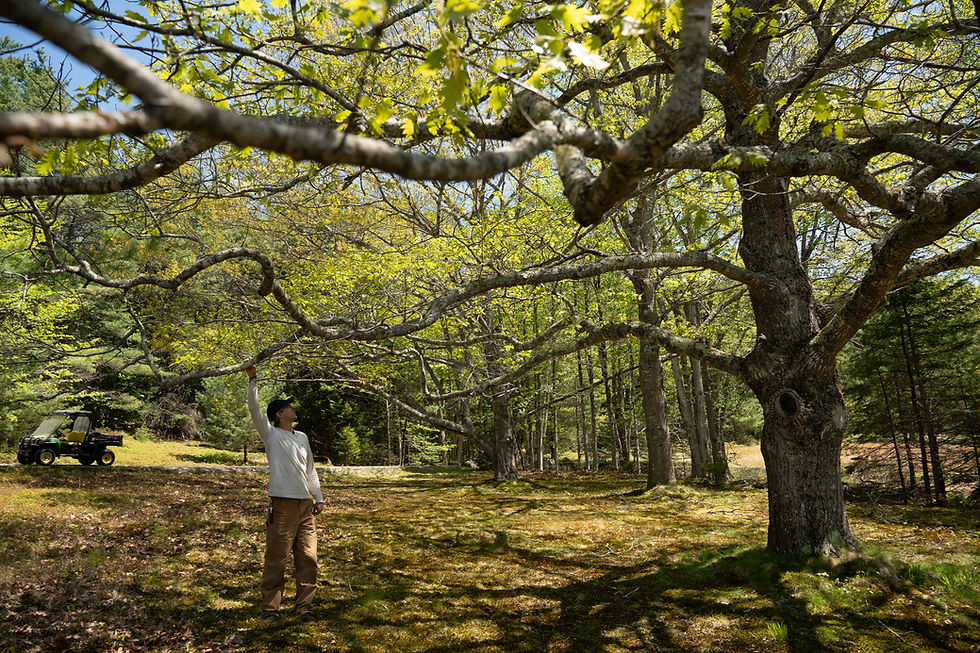
The project is led by Jill Wilson, a gardener at Thuya Garden who joined us last fall. Jill’s position includes multiple garden tasks in the wilder portions of the landscape outside of the border garden, including the Thuya Landing and Asticou Terraces. She will be creating and overseeing a bio-survey program for the Preserve, with contributions from this iNaturalist reporting.
Cassie Banning, Director of Horticulture, is also excited that Jill will be working with her to manage the Preserve’s IrisBG plant database, supporting the garden staff as they document the plants in our three gardens. Visit Garden Explorer | Land & Garden Preserve to learn about the plants in our gardens.
Jill is a botanist by training, with a master’s degree in Forest Entomology from Purdue University, where she taught ecology and entomology labs to first-year science majors. It was in these labs that she developed a deeper appreciation for iNaturalist, using it as a tool for students to share the insects they collected and build a class record for future students to explore. She also holds a BS in Horticulture and a BA in Ecology from the University of Georgia, where she studied how different research approaches—long-term studies, short-term projects, and herbarium records—can be used to track phenological changes in alpine plants. That experience informs her decision to begin with a community science approach before moving into more formal research on Preserve lands.
When you visit the Preserve's lands and gardens, please consider uploading photos to the project. Every observation helps build a clearer picture of the life around us. We will share our findings next year.


Comments